8 Hidden Additives in Plant-Based Foods Exposed by Experts (2026)
What Hidden Additives in Plant-Based Foods Really Means in 2026
The plant-based food industry is booming in 2026, with over 70% of households incorporating meat alternatives, dairy-free products, and vegan snacks into their diets. But while these foods are marketed as “clean” and “natural,” a growing body of research reveals that many plant-based options contain concealed ingredients — commonly known as hidden additives — that can impact your health in unexpected ways. These compounds, often masked under technical names or vague “natural flavors,” are used to improve texture, shelf life, and taste, but they may come with unintended consequences.
According to a 2025 report from the Clean Label Project, more than 60% of popular plant-based foods contain at least one additive not clearly disclosed on front-of-pack labeling. The global push for transparency has exposed a variety of stealth additives, from emulsifiers and artificial colors to chemical preservatives. Understanding what these hidden ingredients are — and how they affect your body — is more critical than ever as plant-based eating becomes a mainstream lifestyle.
Still guessing what's in your food? One free scan with Wildverse shows you everything the label hides — in 3 seconds.
8 Concealed Additives in Plant-Based Foods You Need to Know
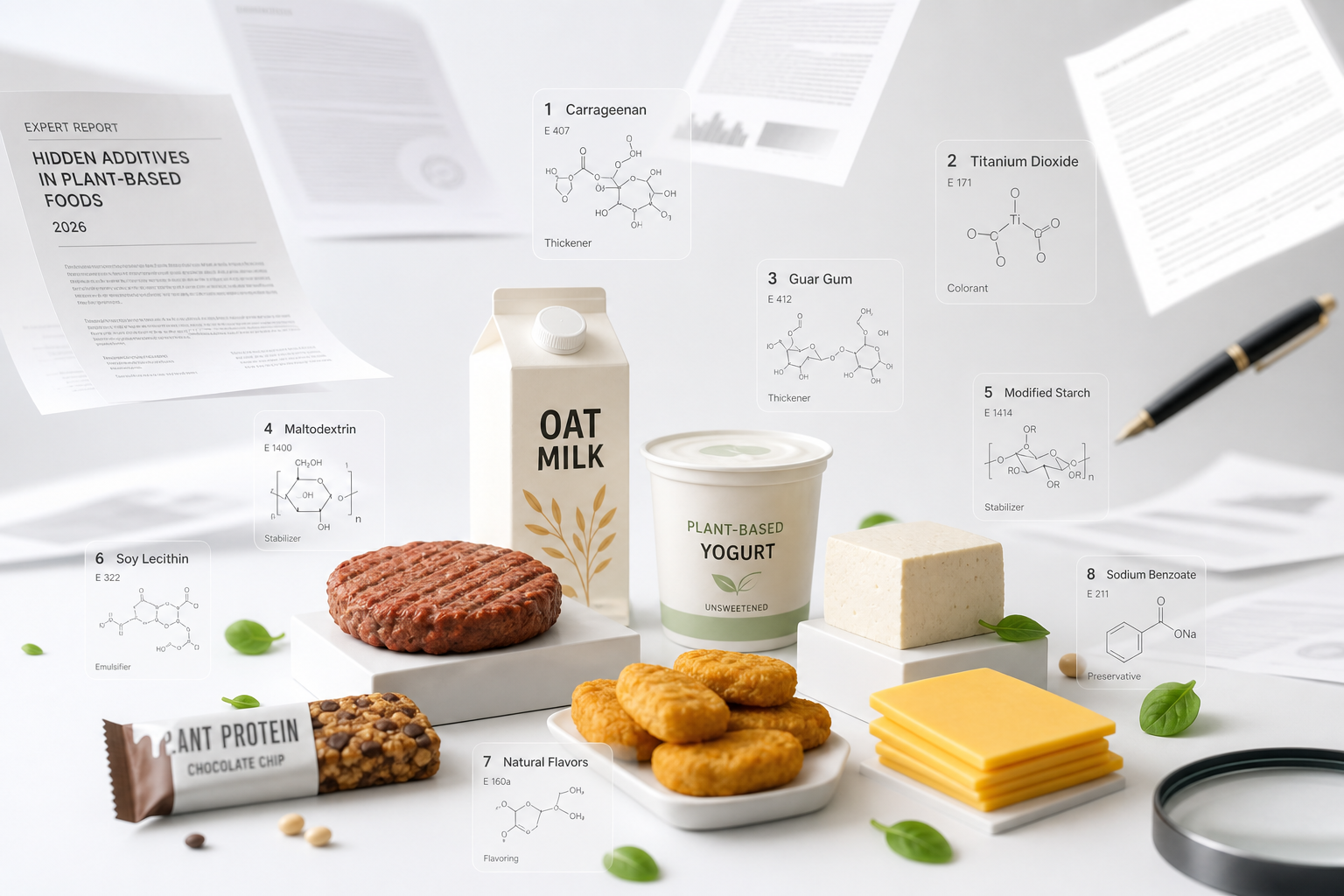
- Modified Starch — Used to enhance texture and stabilize products like plant-based yogurts and cheeses, modified starch is often derived from corn or potatoes. While generally regarded as safe, studies show that excessive intake may disrupt gut microbiota and elevate blood sugar levels, especially in ultra-processed foods.
- Potassium Sorbate — This preservative is widely used to extend shelf life in vegan cheeses, dairy-free milks, and prepared meals. Long-term consumption of potassium sorbate has been linked to allergic reactions and potential DNA damage in high doses, according to a 2024 review published in the journal Food Chemistry.
- Artificial Colors (e.g., Red 40, Yellow 6) — Many plant-based snacks, protein bars, and faux meats contain synthetic dyes to enhance visual appeal. Recent studies have raised concerns about behavioral impacts in children and possible carcinogenic effects with prolonged exposure.
- Maltodextrin — This highly processed carbohydrate is often added as a thickener or filler in plant-based protein powders and meat substitutes. Maltodextrin spikes blood sugar rapidly and may suppress beneficial gut bacteria, as found in a 2023 study published in Gut Microbes.
- Natural Flavors — A vague term that can mask a cocktail of chemicals, solvents, and carriers derived from both plant and animal origins. While the term sounds wholesome, the FDA allows dozens of substances under this label, making it nearly impossible for consumers to know what they're truly ingesting.
- Carrageenan — Extracted from red seaweed, carrageenan is used as a thickener in plant-based milks and yogurts. Research has linked food-grade carrageenan to digestive inflammation and disruption of gut lining in susceptible individuals.
- Phosphates — Often listed as “sodium phosphate” or “calcium phosphate,” these compounds help retain moisture and improve texture in plant-based deli slices and faux cheeses. Excess phosphate intake is associated with kidney stress and cardiovascular concerns, especially in populations with underlying health issues.
- Hidden Sugar Alcohols (e.g., erythritol, sorbitol) — To keep products “sugar-free,” many plant-based treats rely on sugar alcohols that are not always clearly labeled. These can cause digestive upset and may not be as benign as once thought. For a deeper look, see our article on hidden sugar alcohols safety.
Thousands are already scanning their food daily. Don't eat blind — see what's really in your food with Wildverse.
How Concealed Additives in Plant-Based Foods Affect Your Health — What Science Says
The health impact of hidden additives in plant-based foods is an evolving field, with new research surfacing every year. While many food additives are considered safe by regulatory agencies in small quantities, cumulative exposure — especially from eating multiple processed plant-based products daily — can pose risks. For example, a 2025 meta-analysis in Nutrition Reviews found that people consuming more than five servings of ultra-processed plant-based foods per week had a 23% higher risk of digestive complaints and food sensitivities compared to those eating minimally processed versions.
Experts warn that some stealth ingredients, such as artificial colors and certain preservatives, can trigger allergic reactions, gut inflammation, and even metabolic changes. Additives like maltodextrin and phosphates may go unnoticed on ingredient panels but have been linked to spikes in blood sugar and kidney strain, particularly in susceptible individuals. As more consumers turn to plant-based diets for health, transparency about these concealed chemicals is increasingly demanded by both nutritionists and the public.
Can hidden additives in plant-based foods cause long-term health issues?
Yes, repeated exposure to hidden additives, especially in highly processed plant-based foods, can contribute to long-term health issues such as gut dysbiosis, allergic reactions, and metabolic disturbances. While single exposures are generally safe, the cumulative effect over months or years is still being studied, with some evidence suggesting increased risk for digestive and cardiovascular problems in sensitive populations.
Your neighbor already scanned their pantry. Have you? Try Wildverse free — the AI food scanner trusted by health-conscious families.
Frequently Asked Questions About Hidden Additives
What are some common hidden additives in vegan and plant-based foods?
Common hidden additives in vegan and plant-based foods include modified starch, potassium sorbate, artificial colors, maltodextrin, natural flavors, carrageenan, phosphates, and sugar alcohols. These are used to improve texture, taste, and shelf life but may pose health risks if consumed frequently.
Are natural flavors really natural in plant-based foods?
Despite the name, "natural flavors" in plant-based foods can include a wide range of processed chemicals, solvents, and carriers, some of which may not be plant-derived. The FDA allows many substances under this term, so consumers often don't know the true ingredients behind the label.
How can I avoid concealed additives in plant-based products?
To avoid concealed additives, choose minimally processed foods, read ingredient lists carefully, and use tools like the Wildverse scanner to reveal hidden chemicals. Opt for whole-food options such as fresh fruits, vegetables, and simple legumes whenever possible.
Is it safe to eat plant-based foods with artificial colors and preservatives?
While small amounts of artificial colors and preservatives are considered safe by regulatory agencies, regular consumption of these additives can increase the risk of allergic reactions, digestive issues, and potential long-term health effects. Moderation and informed choices are recommended.
What Wildverse Experts Recommend
Based on the latest research and our own analyses, Wildverse nutrition experts advise consumers to be vigilant about the stealth ingredients lurking in plant-based options. Even foods labeled as “natural” or “healthy” can hide a cocktail of additives — from modified starches to synthetic dyes — that may impact your gut, metabolism, and overall well-being when consumed regularly. Our investigation uncovered that more than half of the most popular vegan products in 2026 contain at least one ingredient associated with adverse health effects in recent studies.
To protect your health and make smarter choices, always scrutinize ingredient lists, seek out minimally processed alternatives, and leverage technology to uncover what’s really in your food. With the right tools and awareness, you can enjoy the benefits of plant-based eating — without the hidden risks. For more on sweetener risks, see our post about artificial sweeteners side effects and discover how AI is changing food transparency in AI vs hidden sugars in food.
🦖 Free AI Scanner
What Are You Really Eating?
Thousands of people are already scanning their groceries with Wildverse. One scan reveals every hidden additive, sugar, and chemical in your food — in 3 seconds. Don't be the last to know what's on your plate.
Start Scanning Free →
No downloads. No signup. Just the truth about your food.